The Hawks Nest Tunnel Disaster: Industrial Power, Hidden Labor, and a Mountain That Killed
Across the American landscape, the physical remnants of infrastructure often outlast the memories of the people who built it. Rail alignments fade into forests, canals become property lines, and tunnels persist long after their original purpose is forgotten. Few sites better illustrate this imbalance between enduring infrastructure and erased labor than Hawks Nest, West Virginia, a place where industrial ambition, hydroelectric power, and human catastrophe intersected inside a mountain.
I first heard about this disaster on a podcast called Lawless Planet, which goes in depth into environmental disasters and general criminal activity as it relates to the clean energy transition. I highly recommend it as far as podcasts go, and that's coming from someone who typically dislikes the true crime genre.
It should be noted that non-fossil fuel based energy sources are nothing new; and the Hawks Nest Dam project, were it constructed today, would likely be labeled as a clean energy project.
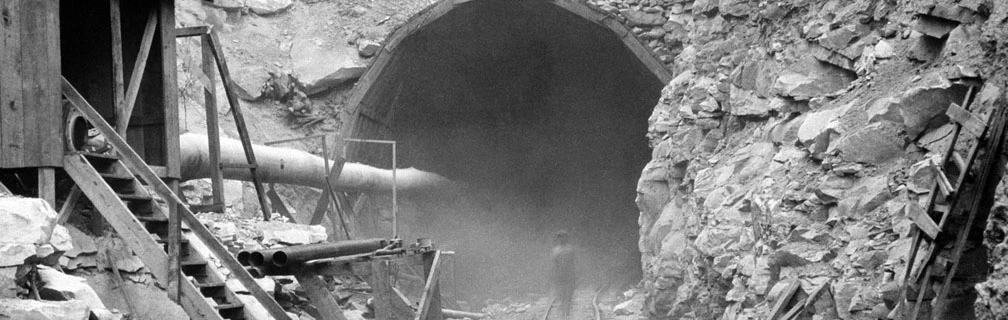 |
Construction of the Hawk's Nest Tunnel, c 1930. National Park Service |
The Hawks Nest Tunnel Disaster of the early 1930s is often described as one of the worst industrial disasters in American history; yet it remains strangely peripheral in public memory, despite its staggering death toll and lasting implications for labor law, occupational health, and infrastructure governance. At its core, Hawks Nest was not an accident, but rather, it was the predictable outcome of a system that treated workers as expendable inputs into industrial and energy networks.
 |
| Workers outside the tunnel. NPR Image via Isabel Abrams on Medium |
The Hawks Nest area is located in Gauley Bridge, Fayette County, West Virginia, near the dramatic confluence of the New and Gauley Rivers. This rugged Appalachian landscape, defined by steep ridges, narrow river corridors, and dense forests, was long valued less for settlement than for its extractive and hydraulic potential. By the early twentieth century, these rivers represented untapped energy waiting to be converted into industrial power.
 |
Today, it is home to the New River Gorge Bridge which carries US 19 over the gorge. Lonely Planet via Getty Images |
The project was commissioned by Union Carbide and Carbon Corporation, a major chemical conglomerate expanding aggressively during the interwar period. Today, it is a subsidiary of Dow Chemical and simply known as Union Carbide. The electricity generated by the Hawks Nest Tunnel would supply power to nearby electrochemical plants producing silicon alloys and other industrial materials critical to aluminum processing and synthetic manufacturing. In an era defined by electrification, industrial consolidation, and vertical integration, this project fit squarely within national trends.
Construction began in 1930, just as the Great Depression tightened its grip on Appalachia. For West Virginia officials and local communities, the project promised jobs, economic relevance, and modernization. For Union Carbide, it promised control over energy inputs, which was an increasingly decisive factor in industrial competition. The mountain, however, concealed a geological hazard that would transform the project into a mass grave.
The workers who dug the Hawks Nest Tunnel labored under conditions that were not merely dangerous but lethally negligent. The tunnel passed through sandstone that was exceptionally rich in silica. When drilled at speed using pneumatic tools, the rock produced fine silica dust that filled the tunnel’s confined space. Inhaling this dust causes silicosis, a progressive and often fatal lung disease known to medical science well before the 1930s.
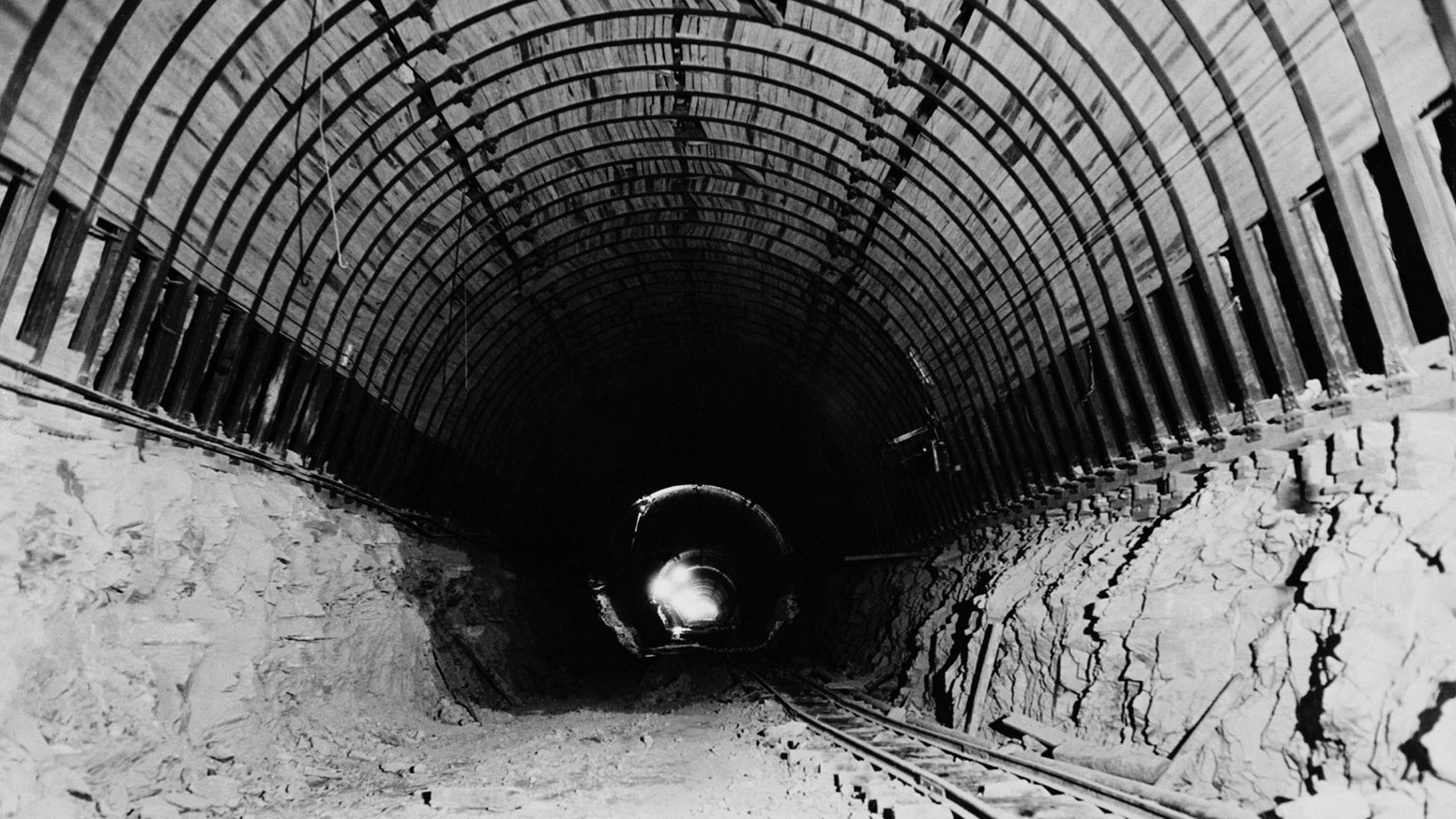 |
| A view inside the tunnel near completion. We Urbanist. |
Despite this knowledge, workers were provided with little to no protective equipment. Ventilation within the tunnel was minimal or nonexistent for long stretches of construction. Many laborers worked shirtless in extreme heat, their lungs absorbing silica particles hour after hour. The faster the tunnel advanced, the more dust was generated - and speed was rewarded.
The workforce was overwhelmingly composed of African American men and poor white laborers, many of whom were migrants drawn by the desperation of the Depression. Employment was often informal, medical records were sparse, and death certificates, when issued at all, frequently obscured the cause of death. Workers who became ill were dismissed and replaced with new hires, creating a steady churn of expendable labor.
Within months, men began coughing uncontrollably, gasping for breath, and collapsing. Many died on-site; others were sent home to die quietly, their deaths unrecorded or misattributed. Estimates of the death toll vary, but historians generally agree that at least several hundred workers died from silicosis contracted on the job.
 |
| Hawks Nest Rail Bridge over the New River. Photo by Lori Stevens on Unsplash |
 |
For decades, the disaster remained largely absent from official histories of the project. The hydroelectric system functioned as intended. Power flowed. Industry expanded. The landscape bore no obvious sign of the lives lost beneath the mountain. This asymmetry, between permanent infrastructure and disposable labor, is a recurring theme in the geography of industrial development. Hawks Nest is not unique; it is simply one of the starkest examples. While the death toll is uncertain, and estimates vary wildly from dozens (by Union Carbide) to over 2,000, the National Park Service lists at least 764 fatalities linked to the tunnel construction and subsequent silicosis.
Public attention eventually reached the disaster after congressional hearings in the 1930s exposed the scale of death and corporate negligence. Survivors and families pursued legal action, resulting in settlements that were modest at best. Many claimants received compensation that barely covered burial expenses or medical costs. Though limited, these lawsuits contributed to the early recognition of silicosis as a compensable occupational disease.
In subsequent decades, Hawks Nest influenced industrial hygiene standards and workplace safety regulations, shaping reforms long after the tunnel’s completion. Today, silicosis is widely recognized and regulated, in part because tragic cases like Hawks Nest highlighted the devastating consequence of occupational exposure.
Today, Hawks Nest is now best known for its scenic overlook and recreation opportunities at Hawks Nest State Park, which draws visitors to views of the New River Gorge and nearby trails. Yet while the natural beauty attracts tourists and locals alike, the memory of the men who died building the tunnel remains faint. A small memorial and historical marker acknowledges the site’s history, but few visitors arriving for scenic vistas are aware of the human cost beneath the soil.
Thanks as always for reading!


Comments
Post a Comment