Posts

Showing posts with the label Chicago

The Englewood Trail: Soon to be Chicago's Newest Rail Trail and Linear Park!

Image
Almost eight (!) years ago, I came up with my own list of ideas for new rail trails in the Chicago area , that might piggyback off of the success that The 606 Trail has had with regards to community redevelopment, developing excellent bike infrastructure, and connecting neighborhoods across Chicago's North Side. One of the proposals at that time was just gaining steam, the Englewood Trail, which would use a abandoned spur owned by Norfolk Southern Railway between 58th and 59th St in Chicago's Englewood neighborhood, and if all goes according to plan, will be opening as a linear park late next year! While projects like the 606 or the High Line focused heavily on recreation and aesthetics, the Englewood project is designed as an economic and ecological engine. It aims to serve the people currently living in the neighborhood by addressing decades of systemic disinvestment through urban agriculture and local job creation. For those following the history of Chicago’s industrial ar...

The Model Railroad Garden at Chicago Botanic Gardens

Image
What a difference two years makes. I say that primarily because about two years ago, we visited the  Model Railroad Garden  at the Chicago Botanic Garden , and I am just now sharing my experience there with you all!  The Model Railroad Garden is an upcharge attraction when visiting the Botanic Garden, which itself used to charge only for parking, but now charges admission per adult, but nonetheless, quite worth it in my opinion, despite its relatively small size in comparison to some of the other exhibits. I first visited the Model Railroad Garden when I was about 10 or so, and it definitely connected my love of trains with the love of the outdoors and picturesque landscapes. The outdoors and manicured gardens offer a sense of realism that many railroad models just can't replicate, but that's not to say I enjoy exhibits like the Museum of Science and Industry's Great Train Story any less interesting. A Santa Fe model in action at the Garden, one of numerous 2 gauge scal...

The Iroquois Theatre Fire: A Forgotten Tragedy That Changed Fire Safety Forever

Image
On December 30, 1903, Chicago witnessed one of the worst disasters in its history, and the deadliest theatre fire in the United States. Chicago's early history is unfortunately rife with fire incidents, and this would occur just over three decades following the Great Chicago Fire. The theater was located at 26 W Randolph St in Chicago, on the site where the James M. Nederlander Theatre now exists today. The Iroquois Theatre, a lavish and modern venue that opened just a month before, was packed with more than 1,700 people, mostly women and children, who came to see a matinee performance of the musical comedy Mr. Bluebeard.  Little did they know that a spark from a stage light would ignite a fire that would engulf the theatre in minutes, trapping and killing over 600 people in a horrific scene of panic, chaos, and carnage. The Iroquois Theater before the fire. (Unknown photographer) The Iroquois Theatre was built on the site of the former Hooley’s Theatre , which itself was destroy...

Should the RTA's Metra, Pace and CTA Branches Merge Together?

Image
An article I happened to stumble upon recently alluded to a significant problem in Chicago and the surrounding region's transit infrastructure; namely that it is split into three parts. It's one of those problems of our infrastructure that everyone seems to know, and yet is rarely discussed. Metra handles the regional commuter rail of the Regional Transportation Authority , on paper as the " Northeast Illinois Regional Railroad Corporation ". Rolls right off the tongue. Metra 213 at Blue Island, IL. Photographer: Frank Novak, 1986. FRRandP photo collection. Pace handles suburban bus service, with very few of its routes entering the City of Chicago. Many of Pace's routes, especially their longer routes, date back to the numerous suburban bus systems , which usually didn't interact with one another, with the exception of those routes which replaced interurban rail systems, like the Chicago and West Towns Railway . Pace Bus 6666 at Woodfield Mall. The CTA hand...

Why is a short road in Will County named the Chicago-Bloomington Trail?

Image
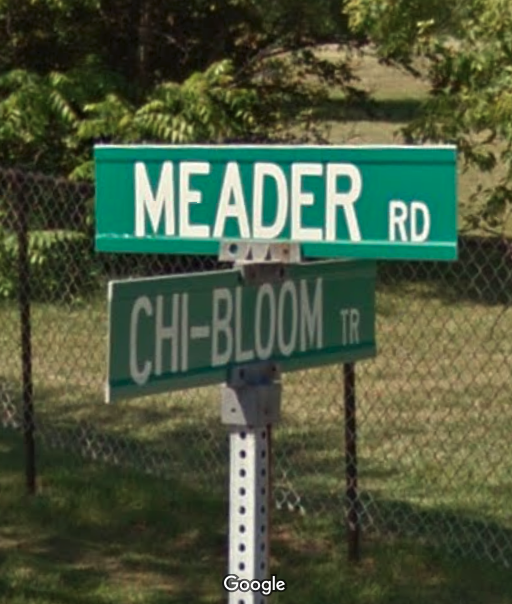
There's a mystery I've been wanting to solve each time I venture down Cedar Rd in central Will County. A slightly-over one mile stretch of road extends from Cedar Road to Hadley Road in unincorporated Will County, near the similarly named settlement of the same name . Were it not named the Chicago Bloomington Trail, it wouldn't bear much though, but given how it's quite far from Chicago, and very far from Bloomington, IL, the nearest Bloomington that comes to mind, one has to wonder if it is a surviving relic that was once part of a much longer road/trail? Chicago-Bloomington Rd at Meader Rd. ( Google Maps Street View ) The answer, like with many roads in the US, is yes, or more accurately, perhaps . It has its origins in old Indian trails , but was plowed as a singular route between Chicago and Bloomington in 1831-34 by new settlers looking  to connect their claims on bodies of water and provide easy access to trade amongst themselves and within the two cities. The or...

"LPS 1921": An Abandoned Building at Waterfall Glen Forest Preserve

Image
What appears to be some kind of stone building from early in the 20th century, today is nothing more than a creepy and haunting part of an otherwise leisurely walk along the Waterfall Glen Trail near Lemont, IL. I first encountered this structure walking with friends in 2012, at the same time that I discovered the abandoned tracks that led into Argonne National Laboratory , which began a few hundred feet east of here along the trail. My initial thought that those two finds may be connected yielded no fruit at all, which led me to the obvious question:  What exactly is this structure, and what does "LPS 1921" mean?  It almost resembles a mausoleum with an open-air roof, although my guess is that it once had a roof that has been lost to time.  This is case where the truth is rather benign, as it is the site of a former nursery, or more accurately, it is a former administration building; the nursery was along the land adjacent to the structure. This is where trees and plant...

Chicago and North Western Railway Power House

Image
Just beyond Ogilvie Station , which was originally named North Western Station, in the West Loop of Chicago exists a smokestacked building that seems to be lost in time amidst the development of the area, and that is the old C&NW Power House , which once powered the eponymous station immediately to its south.  The smokestack is at the end of the building and really jettisons out, making it difficult to photograph all in one picture! (FRRandP Photo, June 2021) First constructed in 1909 and completed two years later, the building was used to power North Western Station, where the Chicago & Northwestern Railway trains terminated in Chicago.  Looking at the building along Clinton St, with skyscrapers visible from the Loop east of the Chicago River. (FRRandP Photo, June 2021) It is the last remnant of the North Western Station, which was demolished in 1984 and reconstructed as Ogilvie Station, which it remains today. "In 1911, Frost and Granger designed a new large passeng...